
Knowledge and memory
Separate durable knowledge from session, workflow, episodic, and organizational memory.
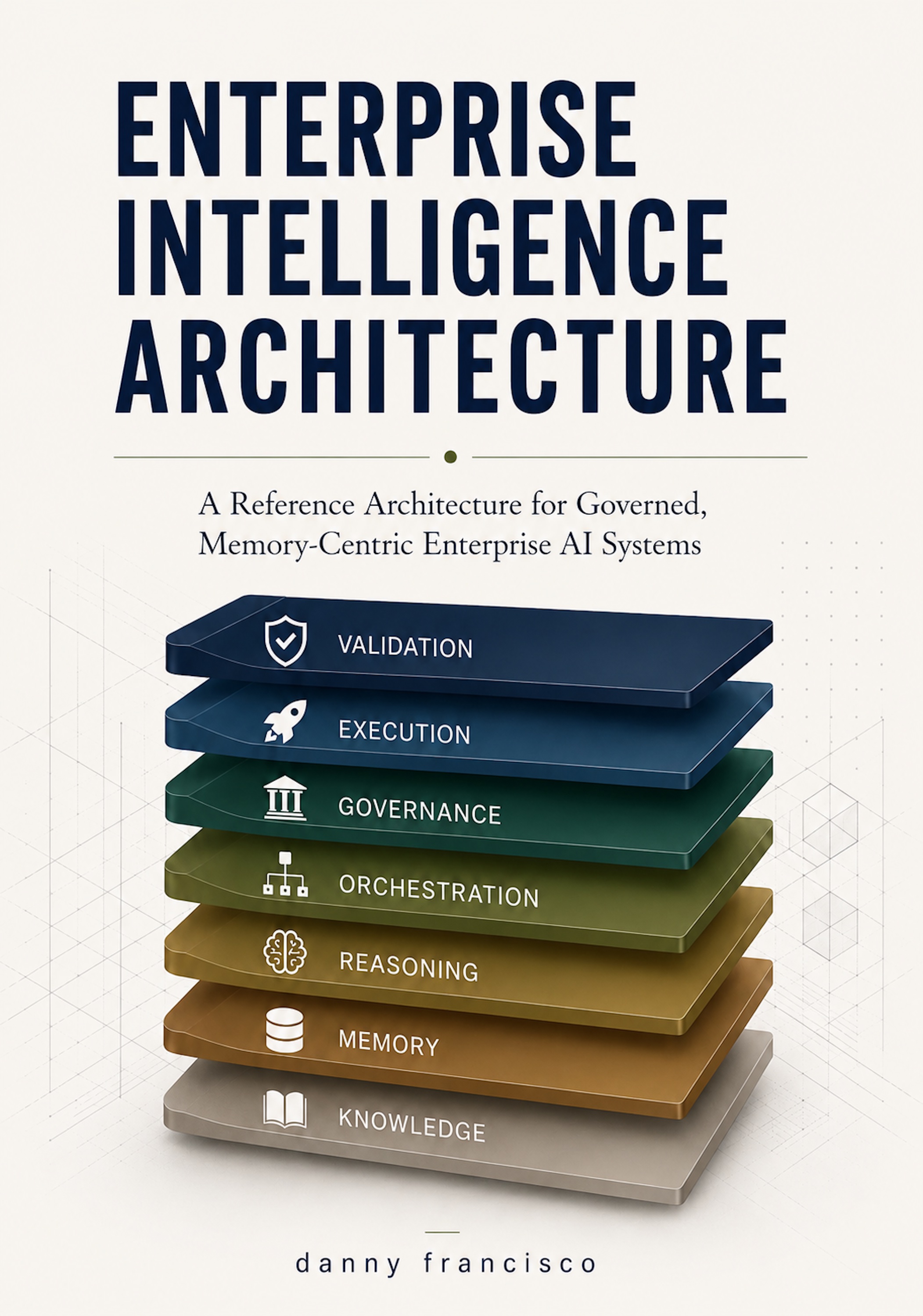
Enterprise AI architecture · First edition
A reference architecture for governed, memory-centric enterprise AI systems.
This book examines the system responsibilities that appear when AI moves from experimentation into operational use. It treats intelligence as an architecture problem spanning knowledge, memory, reasoning, orchestration, governance, execution, and validation.
Version 1.0 manuscript and architecture are frozen. Paperback proof approval is in progress.
01
Enterprise Intelligence Architecture is a technical reference for designing AI systems that must work inside real organizations.
The book moves beyond model selection and prompt design to the responsibilities that make an enterprise system dependable: preserving context, routing work, enforcing policy, recording decisions, handling exceptions, and validating outcomes.
A capable model does not provide memory, authority, accountability, or operational control. These concerns belong to the surrounding architecture. The book provides a shared structure for reasoning about them before they become production failures.
02
Written for people responsible for moving AI systems beyond demonstrations.
03
The book develops a practical vocabulary for the responsibilities of an enterprise intelligence system.
Separate durable knowledge from session, workflow, episodic, and organizational memory.
Match work to capabilities, constraints, and control paths instead of treating routing as a cost decision alone.
Design workflows that preserve state, handle exceptions, and complete work across enterprise systems.
Define policy boundaries, approval responsibilities, and accountable human control.
Use evidence, traceability, review, and outcome verification to support defensible decisions.
Connect the layers into a reference architecture that can be adapted to existing platforms and operating models.
04
Source material and implementation work associated with the architecture.
Reference implementation
The Open Intelligence Platform is the primary implementation reference for concepts introduced in the book, including model routing, enterprise memory, knowledge collections, gateway services, workspace management, and architecture decisions.